
Yes. In the city's walkable core, you can live car-light or car-free on a $2.90 base SEPTA fare plus two free transfers, with regional rail and PATCO covering the wider metro. The catch is geography: transit density drops once you leave the core, and the suburbs mostly run on a car. Match your neighborhood to your commute first.
This is usually the first transit question relocating buyers ask me,and it deserves a real answer rather than a slogan. I'm Craig Lerch, a Philadelphia broker with eXp Realty. In the city core, going car-free works; outside it, it depends on the rail line, the bus route,and the walk from your front door to the stop. Here is the version I walk friends and clients through, with numbers dated so you can re-check them.
What car-free Philadelphia actually runs on
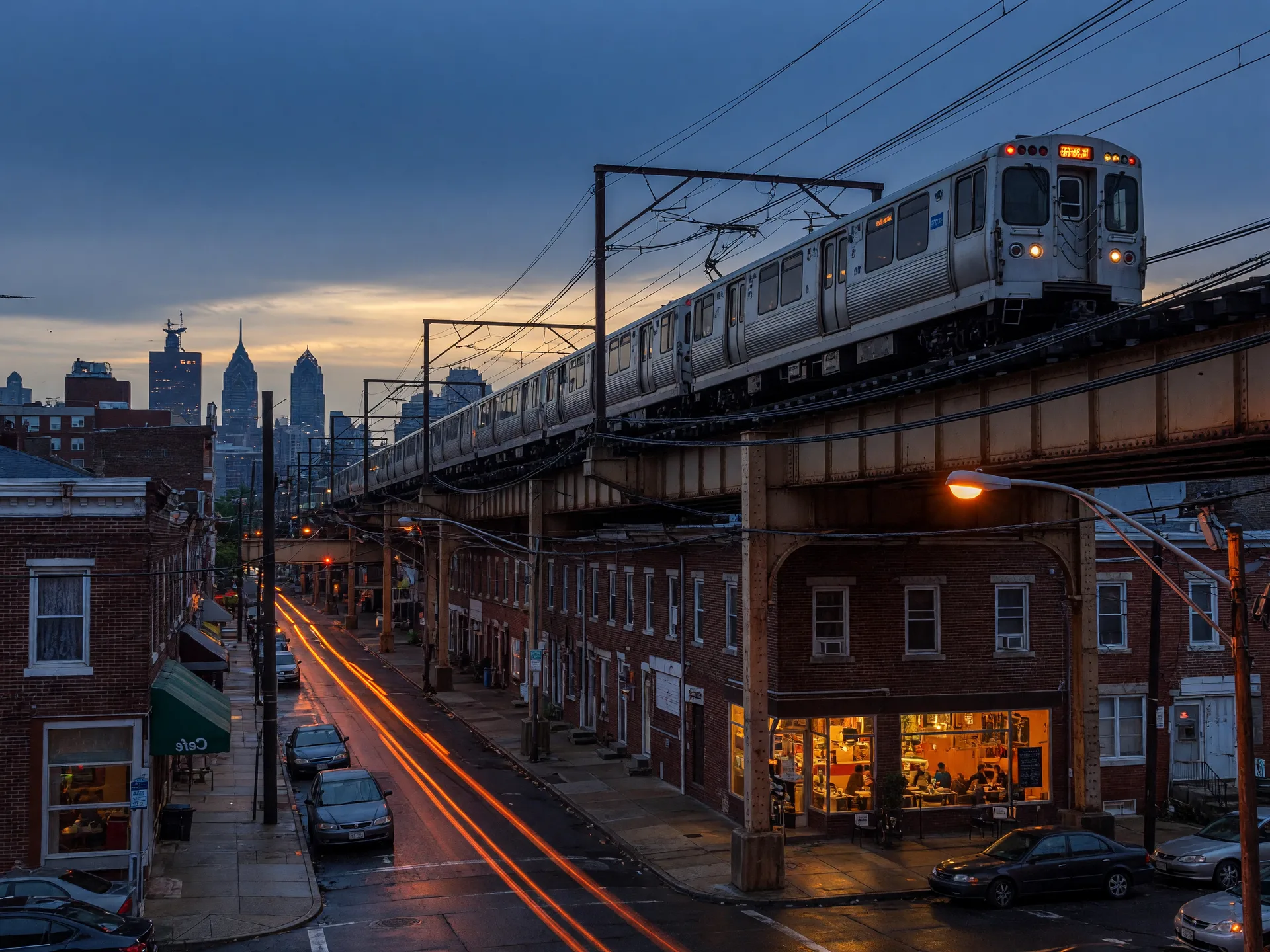
SEPTA runs three mode families that share one payment card but work differently. Over 100 bus routes cross the city and reach parts of every county. The L, the Market-Frankford line, runs east to west;the B, the Broad Street line, runs north to south. Trolleys serve inner neighborhoods. Regional rail, about 13 lines that tunnel through Center City and reach suburban counties and the airport, behaves like commuter rail. PATCO, a separate bi-state agency, runs from Center City under the river to Camden, Haddonfield, Collingswood,and Lindenwold in South Jersey. NJ Transit reaches North Jersey from Philly via Trenton. Amtrak links 30th Street Station, at the doorstep of University City,to New York and Washington. The same SEPTA Key card gets you onto almost all of it,but each mode prices differently.
The fare math in September 2026
As of September 2026,the base fare on SEPTA bus, subway,and trolley is $2.90 when you tap a Key card, Travel Wallet, or contactless card or phone,and cash costs the same. The fare rose from $2.50 to $2.90 in September 2025 as part of a system-wide adjustment. The Key card costs $4.95 to buy,and SEPTA refunds that money when you return it. Tap with a Key or contactless,and you get up to two free transfers onto other buses, subway,and trolleys within 2 hours of your first tap.(SEPTA, verified September 2026.)
Regional rail setsa separate, zone-based fare instead of the flat $2.90. Pay-per-ride runs $5.00 in Zone1, $6.50 in Zone2, $7.75 in Zone3,and up to $11.00 in the furthest zones when you tap ahead with a Key or contactless;buying onboard costs more. Weekly and monthly passes exist,and some bundle regional rail within the city,so check the current pass terms on SEPTA's fare page for your exact route.(SEPTA, verified September 2026.)
The two rapid lines run about 5 a.m. to about 1 a.m. daily,with owl replacement buses after hours:they are not 24-hour. PATCO, across the river, runs 24 hours a day,7 days a week,with trains about every 30 to 40 minutes overnight,and fares from Center City to South Jersey run about $2.25 to $3.00 by distance,paid with cash,card,or FREEDOM Card.(PATCO, verified September 2026.)
How car-free living differs across the metro
In the city,the answer changes block to block. Center City, Rittenhouse Square,and the river wards sit on the transit spine:work, groceries,and regional rail are a walk or one ride away. Blocks in outer and Northeast Philadelphia rely mostly on buses,which run widely but slower than rail. The suburban counties, Montgomery, Bucks, Delaware,and Chester,offer a different deal. Towns along regional rail lines,including the Main Line towns on the Paoli line,support a car-light commute for one or two household members,but errands,and school runs usually need a car,and the train often behaves like a second car that lets the first one stay parked most of the week. In New Jersey,PATCO's 24-hour line makes car-free living realistic along its corridor,while most of South Jersey is drive-first,with regional rail and buses as backup. Delaware follows the same pattern:car-first,with SEPTA's Wilmington,and Newark line running regional rail into Philadelphia,but almost everything else in the region expects a driveway.
What surprises someone from New York or North Jersey
If you are used to the MTA's web,Philadelphia reads familiar until it does not. The surprise is not the price. It is the coverage and the clock. Two rapid lines instead of a subway grid. Trains that stop around five in the morning,and restart around one,with owl buses covering the gap. A regional rail system that is real but zone-priced,and kept separate from the subway fare. Meanwhile buses do much of the city's everyday work,and the two-free-transfer window means a bus-to-train trip can cost one fare instead of two,which changes how you plan errands. And when work or family still pulls you north,Amtrak's main Philadelphia station gets you to New York Penn Station,in roughly ninety minutes on the Regionals,and about seventy minutes on Acela.(Amtrak, verified September 2026.)
What most people get wrong
Three myths cost relocating buyers real time. First,that you need a car to even start the search. You do not. SEPTA regional rail runs from Philadelphia International Airport straight through Center City,so you can land,hotel-hop,and tour the walkable core without renting a thing. Second,that Philly transit works exactly like New York's. It does not:two rapid lines,overnight gaps,zone-priced rail,and separate agencies mean plans built on the MTA's assumptions fail on day two. Third,that Philadelphia is one system. It is several:SEPTA,PATCO,NJ Transit,and Amtrak,each with its own fares,schedules,and routes. Getting from a Main Line town to Manhattan means SEPTA regional rail,then Amtrak or NJ Transit,and each leg prices itself.
The practical method: decide with your commute,not with the map
The local detail that national listicles cannot tell you:in Philly,the walk to the stop is the real commute variable. A two-block difference can turn a ten-minute trip into a thirty-minute one,because headways,and transfer timing dominate. So when you visit,stand at the corner you would actually ride,at the hour you would actually ride. That tells you more than any transit-map screenshot.
- List your top three origins,and destinations:home,work or school,and where you actually run errands. Map each one by transit,and by car,on the same weekday,at the same time.
- Run the monthly math with real numbers:transit pass versus car payment,insurance,parking,gas,and,if your job sitsin Philadelphia,the city wage tax,which the relocation cost guide walks through. Your route costs live on SEPTA's fare page,and a CPA can sanity-check anyone's personal tax picture.
- When you tour,ask what parking actually looks like at each property:a garage,a permit,or a block,and what it costs,even if you plan to drive rarely.
- Test the late-night version once:the rails run about 5 a.m.to about 1 a.m.,with PATCO 24/7 across the river. Either that covers your life or it does not,and that is worth knowing before you sign.
- Then run the rest of your search in order:the relocation buyer's checklist guide walks the pre-approval,tour,and offer sequence from start to close.
The concrete next step is to run that commute math before you book flights,because Philly's answer changes street to street. When a shortlisted home sits across the city line or river,and you cannot reach it in person,I will shoot a video walkthrough at eye level,so you see the block without a flight. Ask about that when we talk.