
The short answer
Most Philadelphia homes heat with natural gas, and the typical PGW bill averages about $99 a month across the year, roughly $1,200 a year (PGW's 2025 rate case, verified October 2026). Winter months run $150 to $220 for row homes. What you pay depends on size, insulation, thermostat, and fuel, so ask the seller for utility history before you offer.
I'm Craig Lerch, a licensed broker with eXp Realty, and this is the question I answer most often once buyers see the price tag on an old rowhome. Every figure below was verified against the sources named in October 2026 unless a date is noted, and this is general information, not an estimate of any one property.
The numbers that matter
Philadelphia's heating picture runs on natural gas. PGW, Philadelphia Gas Works, is the city's own gas utility and the largest municipally owned gas utility in the United States, serving about 500,000 customers over roughly 6,000 miles of mains (PGW, verified October 2026). Its 2025 base rate case put the typical residential heating customer's bill at $98.70 a month, about $1,184 a year, for a household using roughly 61,000 cubic feet of gas a year (PGW base rate filing via WHYY, verified October 2026). The same home that bills $20 to $50 in July runs several times that in January.
The bill has two public moving parts. The gas supply rate resets quarterly: PGW's Gas Cost Rate stood at about 46 cents per hundred cubic feet from June 1, 2026, with a new rate effective September 1, 2026 (PGW tariff supplements, verified October 2026). The delivery charge covers the pipes. On the electric side, which matters more for summer cooling than winter heat, PECO's typical customer at 700 kilowatt hours a month pays about $152 a month (Pennsylvania PUC and PECO, verified October 2026).
Why bills swing so much
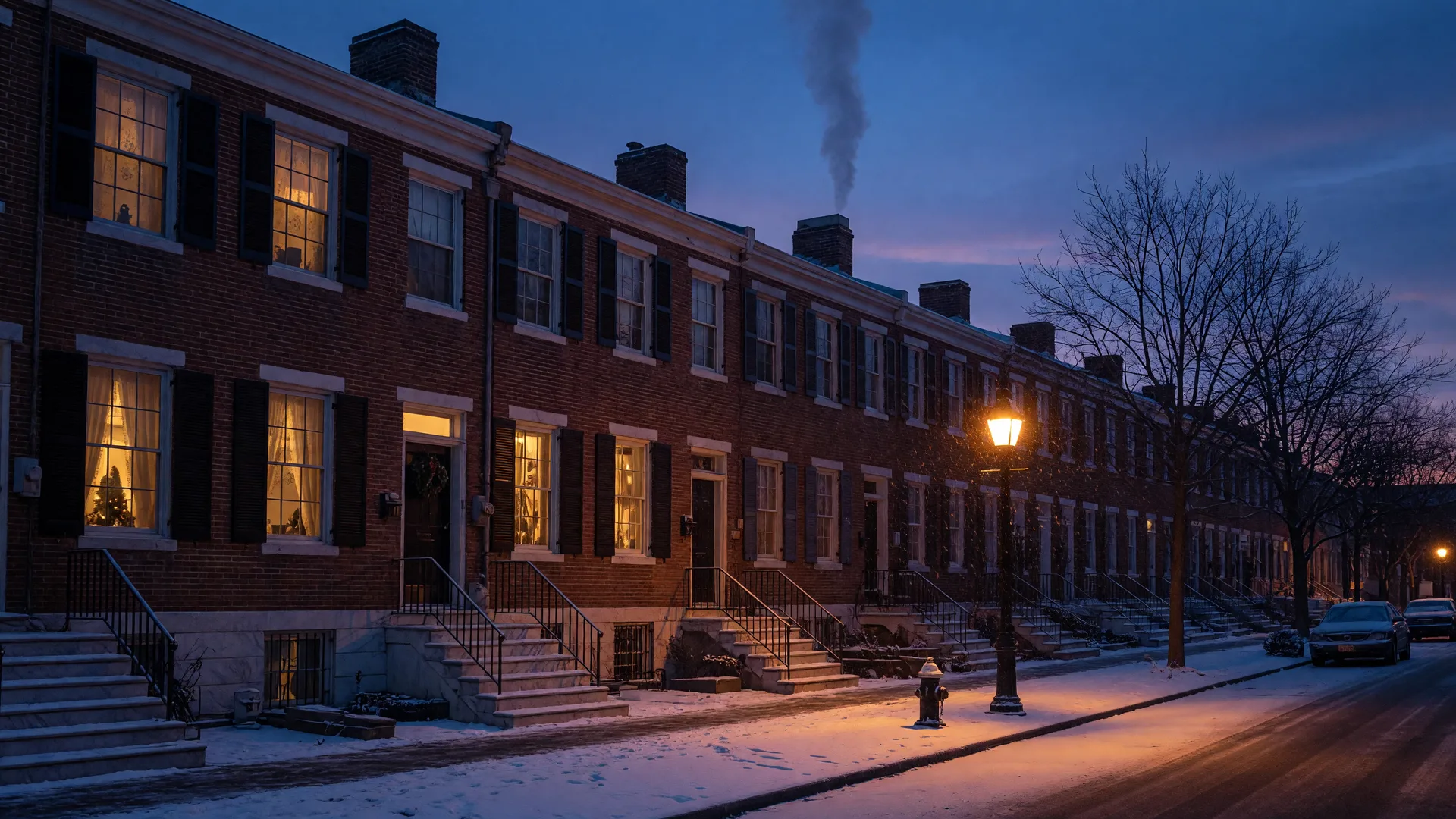
Square footage is the weakest predictor of a heating bill. Insulation, exposure, thermostat, and heating plant matter more. Philadelphia's stock is old, mostly built around 1949 by median year (see the home-age guide below), and most row homes heat with a gas boiler or furnace feeding steam or hot-water radiators, with no ductwork, so central air is rare in them. A mid-block rowhome sits between two neighbors' walls, so only the front and rear walls lose heat; an end unit loses it through a third wall. That geometry is a real line item on the bill.
Philadelphia Reddit threads this fall report winter gas bills mostly in the $150 to $220 a month range for row homes, with a poorly insulated house reported well above $600 in a single winter month, and answers to "is my PGW bill normal?" almost always "yes, for winter" (r/AskPhilly and r/philadelphia, retrieved October 2026). Treat those as anecdotes, not rates; they match the official average and show the honest spread across the city's old stock.
How it differs across the metro
City. Inside Philadelphia, gas means PGW and electric means PECO. Older homes run on radiators. Many Center City condos and high-rises heat from a central plant with the cost inside the condo fee rather than a separate utility bill, so ask how each building meters heat before comparing.
Suburban Pennsylvania. PECO supplies both electricity and gas across most of the four suburban counties, with other utilities covering patches farther out (PECO, verified October 2026). Suburban stock is newer on average and far more likely to have forced air and central air conditioning, so the winter gas bill is often smaller than a city rowhome's even when the house is bigger.
New Jersey. South Jersey homes run mostly on gas as well, served by PSE&G for electric and gas, with South Jersey Gas in the coastal counties. New Jersey protects eligible residential customers from winter shutoffs from November 15 through March 15, a longer window than Pennsylvania's (New Jersey Board of Public Utilities, verified October 2026).
Delaware. New Castle County runs on Delmarva Power for electricity and for gas across most of northern Delaware. Delaware has no blanket winter shutoff moratorium; utilities may not disconnect between December 21 and January 1 or when temperatures fall below 35 degrees, and 2025 legislation restricted after-hours and weekend disconnections (WHYY and the Delaware Division of the Public Advocate, verified October 2026).
If you're coming from Boston
The Boston-to-Philadelphia comparison lands in your favor on almost every line. Massachusetts residential electricity averages about 30 cents per kilowatt hour, roughly 35 to 40 percent above Pennsylvania's 21.7 cents (state price trackers citing EIA data, verified October 2026). Massachusetts natural gas runs around $2 per therm against Pennsylvania's roughly $1.40 to $1.80 (Massachusetts DOER and U.S. EIA, verified October 2026). And the winter is shorter and milder: Philadelphia's normal January average is about 34 degrees with roughly 30 inches of snow a season at the airport, against Boston's 30-degree January and about 49 inches (NOAA 1991-2020 normals, verified October 2026).
The other surprise is fuel mix. About a fifth of Massachusetts homes still burn oil, one of the highest shares in the country, while Philadelphia's older stock sits almost entirely on city gas, so there is no oil tank and no delivery to schedule. Massachusetts has been pushing heat pumps through Mass Save rebates and a discounted seasonal heat-pump rate, while the default answer in an old Philadelphia rowhome remains the gas boiler. And when you buy instead of rent, the gas bill is yours alone, so the winter swing shows up on paper in a way it never did in a heat-included lease.
What most people get wrong
- That the gas bill reflects the stove. In winter the boiler or furnace is nearly the whole bill; the stove and water heater barely register. A $25 July bill and a $200 January bill can be the same home.
- That the average is what you will pay. The average is a midpoint, and draftier old houses swing two or three times either way. The number that counts is the actual property's history.
- That newer is automatically cheaper. A well-insulated suburban house with forced air can heat for less than a drafty old rowhome, and an end-unit row home pays for that extra exposed wall all winter.
- That electric heat is a low-cost backup. Most old city homes have no ductwork, so if a listing says electric heat, ask what kind: baseboard resistance heat is a different bill than a heat pump.
- That your old city's bill predicts this one. Fuel, rates, and building stock differ enough that the same thermostat setting produces a very different bill; compare therms and kilowatt hours, not dollars.
The help that exists, and the deadlines
If household income is at or below 150 percent of the federal poverty level, the help is substantial. Pennsylvania's LIHEAP opens Monday, November 2, 2026, and closes April 23, 2027, with cash grants from $200 to $1,000 depending on income, household size, and fuel type, plus a crisis component (Pennsylvania DHS, verified October 2026). PGW's Customer Responsibility Program sets a fixed monthly bill for qualifying households, typically cutting gas bills by up to half and sometimes to as little as $25 a month, with past-due forgiveness (PGW, verified October 2026).
And regardless of income, the cold months carry protections. Pennsylvania bars utilities from shutting off residential customers in the assistance pipeline between December 1 and March 31, covering PGW and PECO accounts (utility law guidance via Community Legal Services, verified October 2026). New Jersey's equivalent runs November 15 to March 15 and since late 2025 also covers water and sewer (NJ BPU, verified October 2026). Delaware's protection is narrower, as above. These are general rules, not legal advice; if a shutoff notice arrives, call the utility's customer assistance line.
Your next step
Before you write an offer, ask the seller's agent for 12 months of utility bills for the exact address, and read the heating-system section of the Pennsylvania Seller's Disclosure for the age and type of the boiler, furnace, or heat pump. Bill history shows the real winter peaks and whether the house is on gas or electric heat. On the tour, ask how old the heating plant is: a 25-year-old boiler headed for replacement is a five-figure line item. Done before you bid, that diligence is how you budget for the house, not the house plus a January surprise.