
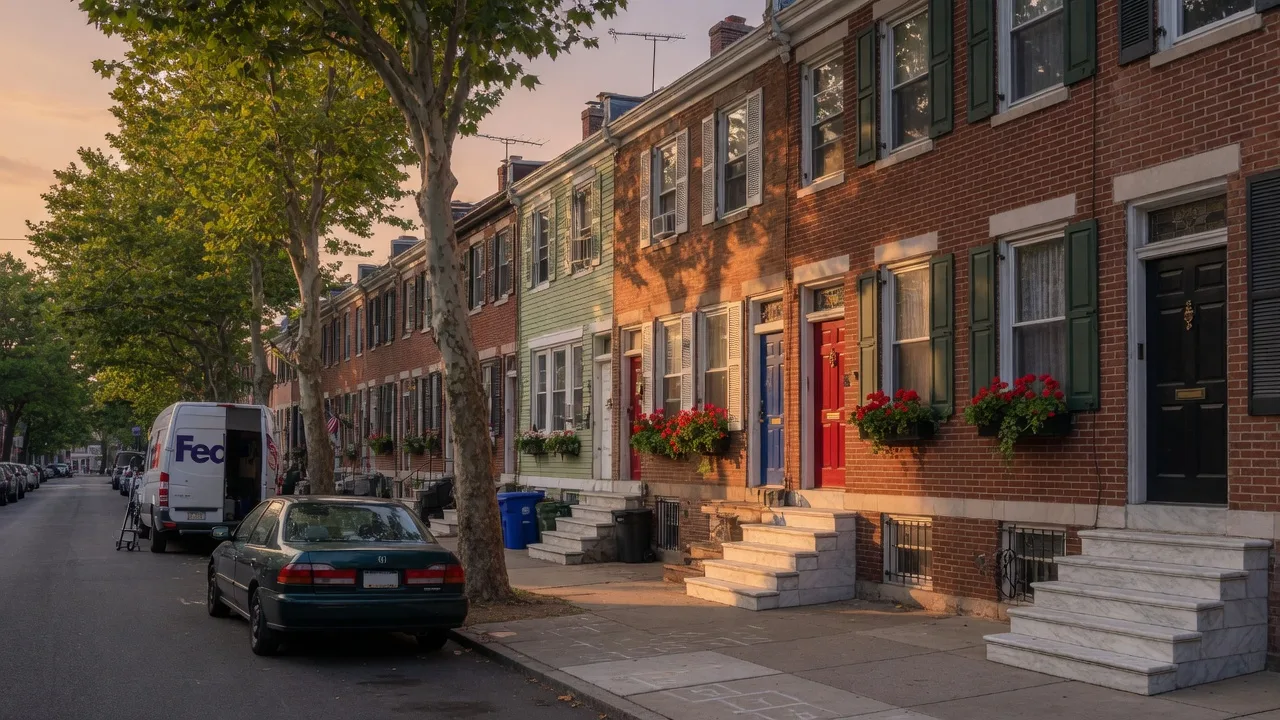
The short list for most New York transplants is Center City, Rittenhouse Square, Old City and Society Hill for the walkable core; Northern Liberties and Fishtown for the Brooklyn-energy river wards; University City when the Amtrak platform has to be walkable; and Chestnut Hill or the Main Line for buyers who want the village or the suburbs with rail access. Each of these shows a transit score below, measured as typical minutes to Center City, because the Amtrak commute to New York starts from 30th Street Station and the honest planning number door to door is 2 to 2.5 hours (verified October 2026).
I'm Craig Lerch, a broker at eXp Realty, and this is the guide I walk New York buyers through on their first call: block-by-block fit first, commute second, and the price gap last, because the price gap is the same everywhere.
How to read this guide
The criteria that matter for a New York transplant are walkability, commute to wherever the Manhattan office actually is, housing form, and resale. Philadelphia is a block-by-block market, so think of each area below as a starting point, not a blanket. The transit numbers are typical minutes from the neighborhood's center to Center City, where the regional rail hub and the subway lines converge.
The walkable core: Center City and Rittenhouse Square
Center City scores a 5-minute transit index and Rittenhouse Square a 7, the shortest in the city, and it is the most compact downtown on the East Coast. High-rise condos, converted lofts, and historic townhomes sit steps from City Hall and the region's best transit connections. For a New York transplant it is the closest thing to living in a doorman neighborhood without the New York price, and it is the lock-and-leave choice for professionals and empty nesters.
The commute note cuts both ways: Center City is close to the train, but 30th Street Station sits on the west bank of the Schuylkill, roughly a mile from Rittenhouse Square, so add a cab, ride, or 20-minute walk from most downtown addresses before Amtrak leaves.
Old City and Society Hill: the history play
Old City and Society Hill score an 8 and offer colonial brick, cobblestones, and 18th-century rowhomes on the edge of the Delaware River, a short walk from Independence Mall and the waterfront gallery scene. Buyers who want texture on the doorstep and a resale story that writes itself start here. It is walkable to the Market-Frankford Line and a reasonable ride to 30th Street.
The river wards: Northern Liberties and Fishtown
Northern Liberties (10 minutes) and Fishtown (12) are the closest analogs to a Brooklyn move that Philadelphia offers: 19th-century warehouses turned loft condos, modern townhomes under the Ben Franklin Bridge, and a Frankford Avenue restaurant corridor that rivals anywhere in the region. Fishtown is classic brick rowhomes and modern infill side by side, served by the Market-Frankford El, with strong appreciation near the main drag. These are the neighborhoods where creative professionals and couples trading up from renting land, and where New Yorkers feel the least cultural distance.
University City: the walk-to-the-train play
University City scores a 10 and is the one Philadelphia neighborhood where the Amtrak platform is genuinely walkable: 30th Street Station sits at its edge, on the west bank of the Schuylkill, so a buyer here can roll a suitcase to a New York train without a cab ride. It is the Penn and Drexel district, with faculty, researchers, and medical professionals, plus an inventory of condos, converted apartments, and rowhomes the university crowd rotates through. For a twice-a-week Amtrak commuter, this is the address with the shortest door-to-door math on the whole list.
Fairmount and the Art Museum district
Fairmount and the Art Museum district score a 10 and bring brownstones, boathouses, and Fairmount Park steps from the door, plus a stable family block scene a short walk from the museum steps and the Kelly Drive running loop. It is the pick for runners, cyclists, and families who want green space without leaving the city grid.
For the rail commute: Chestnut Hill and the Main Line
Chestnut Hill and the Main Line both score a 35-minute transit index and swap forth-and-back city block life for a village feel or suburban rail-served space. Chestnut Hill is a village of stone and trees inside the city limits, walkable main street, and strong family fundamentals. The Main Line is stone houses and top-rated districts along SEPTA's Regional Rail, the classic suburban option for buyers shopping schools and space. The commute note is honest: from either one, you ride SEPTA into Center City first and then transfer to Amtrak, which adds roughly 30 to 45 minutes door to door versus a Center City or University City base, before the 1 hour 10 to 1 hour 35 minute train to New York even starts (verified October 2026).
The commute math that should shape the shortlist
- Amtrak from 30th Street Station to New York Penn runs about 1 hour 10 to 1 hour 35 minutes, and the honest door-to-door planning number is 2 to 2.5 hours.
- University City is the only neighborhood where the platform is a walk, which is why twice-a-week commuters gravitate there.
- Center City and Rittenhouse need a ride or 20-minute walk to the station; budget that leg into every trip.
- Chestnut Hill and the Main Line add a SEPTA-to-Amtrak transfer that runs 30 to 45 minutes before the New York train departs.
- Fares are dynamic, so the monthly number depends on booking timing: advance Regional tickets from about $11, typical fares $50 to $100, Acela above that.
What most NYC transplants get wrong
- That 30th Street Station is downtown. It is on the west bank of the Schuylkill at the edge of University City, and the walk from Rittenhouse is a real mile.
- That SEPTA and NJ Transit work as one system. They connect at Trenton for the budget route, but they are two operators, two fares, and a missed connection is yours.
- That a rowhome is a condo. Philadelphia rowhomes are fee-simple real estate you own outright, no board approval and no flip tax; the shared party wall is the only shared line item.
- That the walkable core is big. Port Richmond is not Center City; the compact downtown concentrates the restaurants, the transit, and the resale.
Book a free relocation call and we will turn this shortlist into a two-week scouting plan with video tours of the actual blocks.