
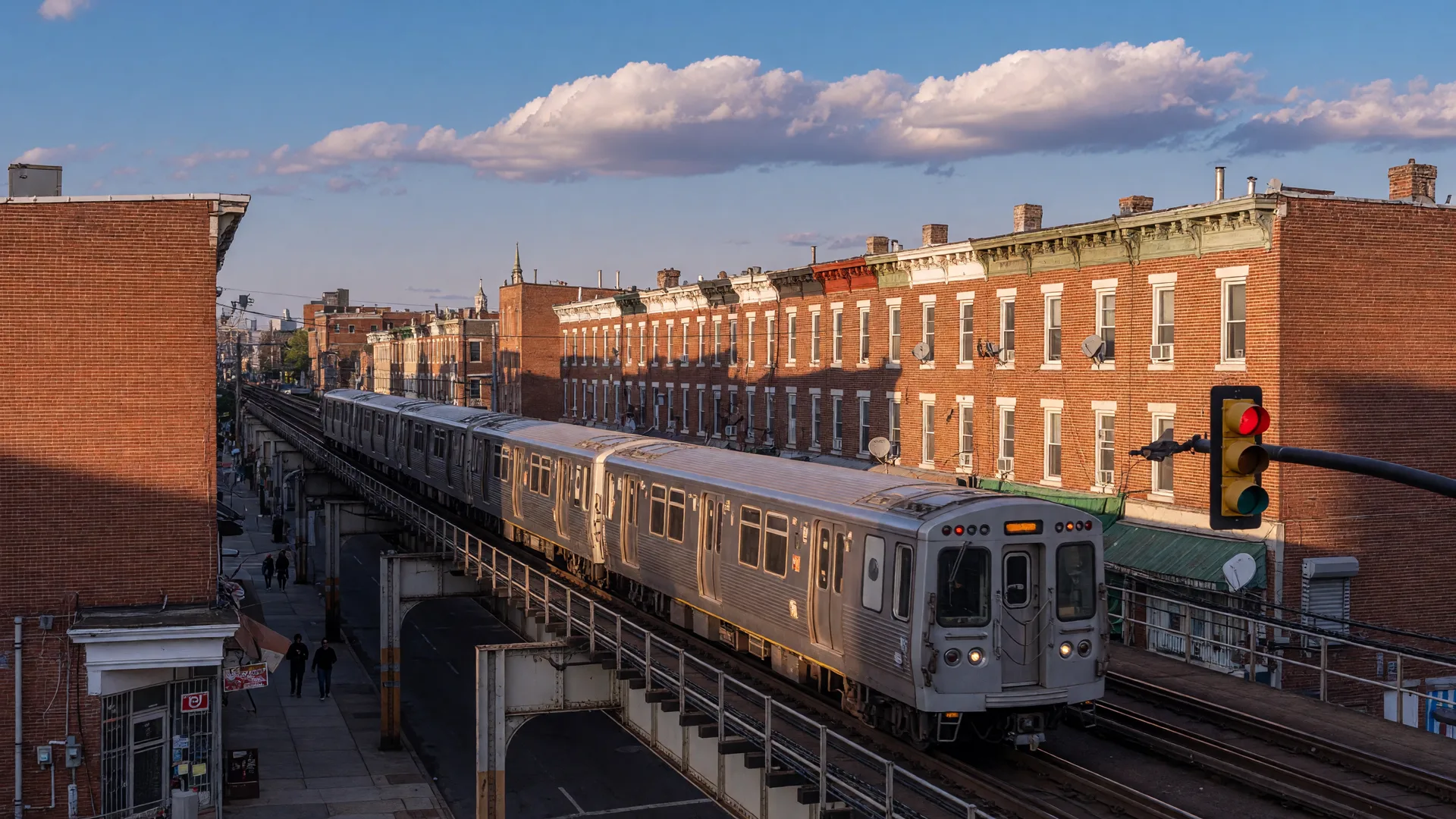
SEPTA and the DC Metro are different tools. SEPTA is a bus-and-trolley system with two subway lines, a flat $2.90 fare with two free transfers, and 13 Regional Rail lines that mostly run seven days a week. WMATA is a six-line heavy-rail system with distance-based fares up to $6.75. SEPTA is cheaper per trip; WMATA covers more subway territory.
I'm Craig Lerch, a broker with eXp Realty, and this is general information, not legal or financial advice. Every figure below was checked against SEPTA, WMATA, and Amtrak sources in October 2026; fares and budgets change, so re-verify anything you rely on before you move.
The short version: they are built differently
The DC Metro is one planned heavy-rail system: six lines, underground through downtown, built mostly in one era. SEPTA is a network that grew over decades: two subway lines, eight trolley routes (five of them underground-surface lines that dive into a Center City tunnel), more than 120 bus routes, and 13 Regional Rail lines reaching four Pennsylvania counties, one New Jersey county, and one Delaware county (SEPTA, verified October 2026). The two overlap on the idea of a subway and diverge almost everywhere else.
A rider from DC usually assumes the subway is the backbone. In Philadelphia the backbone is the surface network: buses and trolleys carry a large share of trips, and the two subway lines, the L (Market-Frankford, east-west) and the B (Broad Street, north-south), form a cross through Center City (SEPTA, verified October 2026).
The numbers: fares, coverage, and budgets
SEPTA's base fare is $2.90 with two free transfers within two hours on buses, trolleys, and the subway, so a bus-to-trolley-to-subway trip costs $2.90 total (SEPTA, verified October 2026). WMATA charges by distance with time-of-day pricing: $2.25 to $6.75 on weekday daytime trips, $2.25 to $2.50 after 9:30 p.m. and all day weekends, a $2.25 Metrobus fare, and a $2 SmarTrip card (WMATA Tariff No. 47, effective November 18, 2025, verified October 2026). WMATA has proposed an 11 percent fare increase for fiscal year 2027, not yet in effect (WMATA, October 2026).
The budget gap is the part that rarely makes the comparison. SEPTA's fiscal 2026 operating budget is roughly $1.8 billion; WMATA's fiscal 2026 budget totals about $4.96 billion, with about $2.6 billion for operations (SEPTA, WMATA, verified October 2026). After federal COVID relief expired, SEPTA faced a recurring $213 million deficit, its board approved a fiscal 2026 budget with deep service cuts and a 21.5 percent fare increase in June 2025, and the state approved a one-time transfer of up to $394 million in future capital funds; full service was restored on September 14, 2025 with the fare increase in place (SEPTA, verified October 2026). SEPTA's proposed fiscal 2027 budget carries no new fare increase or service cuts, but there is still no permanent funding fix (SEPTA, April 2026).
What nobody tells you about the comparison
National moving listicles compare the two systems on a map. The differences that shape a move are below.
- Philly is a bus-and-trolley city. Two subway lines do not go everywhere; the surface network does the rest. A DC rider who filters neighborhoods by Metro access should filter Philadelphia by the SEPTA trip planner instead: the fastest route often mixes a trolley and a bus, and the $2.90 flat fare with two free transfers prices that mixed trip the same as one ride (SEPTA, verified October 2026).
- Regional Rail is the part of SEPTA that DC riders underestimate. The 13 lines and roughly 155 stations run seven days a week on most lines; the Cynwyd Line is the exception, with limited weekday-morning service only (SEPTA, verified October 2026). DC's commuter rail is mostly a weekday product: MARC runs weekends only on the Penn Line (18 trains Saturdays, 12 Sundays), and VRE runs no weekend service at all (MARC, VRE via CommuterPage, verified October 2026).
- The fare math flips on longer trips. WMATA's weekday daytime fare rises with distance to $6.75; SEPTA's does not. A long SEPTA trip costs the same $2.90 as a short one, while a long Metro trip costs three times a short one (SEPTA, WMATA, verified October 2026).
- 30th Street Station is not in the middle of downtown. It sits on the west bank of the Schuylkill at the western edge of Center City, about a mile and an 18-to-20-minute walk from Rittenhouse Square, and the Market-Frankford subway platform is not connected underground to the Amtrak concourse, so the transfer happens above ground (SEPTA, verified October 2026).
- The Amtrak corridor is part of the commute math. Philadelphia to Washington runs about 1 hour 35 minutes to 1 hour 45 minutes on Acela and about 1 hour 50 minutes to 2 hours 10 minutes on the Northeast Regional, with dynamic fares from roughly $19 to more than $290 depending on train, time, and booking lead (Amtrak schedules and fares, verified October 2026).
How it differs across the metro
Inside the city, the $2.90 flat fare with two free transfers covers buses, trolleys, and the subway; Regional Rail adds the longer city runs (SEPTA, verified October 2026). In the Pennsylvania suburbs, Regional Rail zone fares run $5.00 to $8.75 one-way with Key or contactless, more on board (SEPTA, verified October 2026). Across the river, PATCO runs 24/7 into New Jersey at $1.40 to $3.00 one-way (PATCO, verified October 2026), and the Wilmington/Newark Line reaches Delaware (SEPTA, verified October 2026). The same question, is transit good here, has a different fare and schedule in the city, a PA suburb, New Jersey, and Delaware.
Coming from DC or Baltimore
For a DC rider, three things rearrange the plan. First, the subway is not the network: two lines, not six, so the mental map shifts from which line to which mode combination. Second, the fare is flat, not distance-based, and the free transfers change how you plan trips. Third, weekend Regional Rail means a Saturday trip to the Main Line or Chestnut Hill is a real option in a way that MARC and VRE weekends mostly are not (SEPTA, MARC, VRE, verified October 2026).
For a Baltimore mover, the bar is different. A recent Baltimore-to-Philadelphia mover put it plainly in r/philly in August 2025: 'SEPTA on its worst day is miles ahead of the Circulator and everything else in Baltimore' (r/philly, August 2025). And the Amtrak corridor is the practical link: Philadelphia to Baltimore Penn Station runs about 1 hour 10 minutes to 1 hour 20 minutes (Amtrak, verified October 2026), which is why r/Amtrak threads from December 2024 and March 2025 describe weekly Philadelphia-to-DC commutes using 10-ride passes and parking near 30th Street Station (r/Amtrak, December 2024 and March 2025).
What most people get wrong
- SEPTA is a subway system like Metro. It is a bus-and-trolley system with two subway lines; the surface network carries a large share of trips (SEPTA, verified October 2026).
- Metro is cheaper. On a long weekday trip WMATA runs to $6.75 versus SEPTA's flat $2.90, and SEPTA's two free transfers make multi-leg trips cost the same as one ride (SEPTA, WMATA, verified October 2026).
- Commuter rail is a weekday thing. SEPTA Regional Rail mostly runs seven days a week; MARC weekends are limited to the Penn Line, and VRE has none (SEPTA, MARC, VRE, verified October 2026).
- The systems are on equal financial footing. SEPTA's operating budget is roughly 1.4 to 1.5 times smaller than WMATA's, and SEPTA's 2025 crisis was patched with a one-time $394 million capital transfer, not a permanent fix (SEPTA, WMATA, verified October 2026).
- 30th Street Station is downtown. It is west of the river, about a mile from Rittenhouse Square, with an above-ground transfer to the subway (SEPTA, verified October 2026).
Your next step
Score every candidate address on transit before you compare neighborhoods. For each address, run the SEPTA trip planner for your actual destination, note the modes, the fare, and the weekend schedule, and walk the last block at both ends. If you keep ties to DC or Baltimore, price the Amtrak corridor for the trips you would actually make, because dynamic fares swing widely.
Add three rows to your neighborhood-criteria worksheet: commute modes and time, weekly fare cost, and weekend service. Ask for the worksheet on a free call and I will send the blank grid.